Your Competitors Are Stealing Your Customers While You Sleep (Here’s How Branded Apparel Stops Them)

Understanding brand visibility and making smart decisions for your San Diego business
Let’s Start With an Honest Question
When was the last time you really thought about how customers find you?
I’m not talking about your website or your Google reviews. I’m talking about the everyday moments when someone decides they need what you offer and a business name pops into their head.
Why does one name come to mind over another? Why do some businesses seem to be everywhere while others – even really good ones – struggle to get noticed?
After working with San Diego businesses for over 30 years, I’ve learned that visibility isn’t about being the loudest or spending the most on advertising. It’s about being present in the right moments, in the right ways.
Let me walk you through how this actually works, so you can make informed decisions about what’s right for your business.
Understanding How Customers Actually Choose
Before we talk about solutions, let’s understand the problem. And it’s not what most business owners think.
The Reality of Customer Decision-Making
Here’s what research tells us: when people need a service, they don’t usually do extensive research. They call someone they’ve heard of. Someone familiar. Someone who feels safe.
Think about your own behavior. When you needed a plumber last time, did you spend hours comparing options? Or did you call someone whose name you recognized – maybe from a truck you’d seen around, or a shirt someone was wearing at the hardware store?
That’s how most people make decisions. Familiarity drives choice.
The Visibility Gap
This creates what I call the “visibility gap.” You might be the best at what you do. Better service, better prices, better everything. But if potential customers don’t know you exist, none of that matters.
Your competitors aren’t necessarily better. They’re just more visible. And visibility creates familiarity, which creates trust, which creates phone calls.
What This Means for Your Business
Every day, your team is out in the world. At job sites. In coffee shops. Running errands. Grabbing lunch. They’re interacting with dozens, maybe hundreds of potential customers.
The question is: are those interactions building your brand, or are they invisible moments that benefit no one?
The Different Approaches to Visibility
Let’s talk about your options. Because there are several ways to approach this, and the right choice depends on your specific situation.
Option 1: Traditional Advertising
You could invest in radio ads, billboards, online advertising. These work for some businesses.
Pros:
- Reaches lots of people
- Can target specific demographics
- Measurable results (for digital)
Cons:
- Expensive ongoing costs
- Requires consistent investment
- Easy to waste money if not done right
- Stops working when you stop paying
Best for: Businesses with significant marketing budgets who can commit to long-term campaigns.
Option 2: Word-of-Mouth Only
You could rely purely on referrals and word-of-mouth. Do great work and hope people talk about you.
Pros:
- No direct cost
- High trust factor
- Qualified leads
Cons:
- Slow growth
- Hard to scale
- Dependent on customers remembering to refer
- No control over timing
Best for: Very small businesses or highly specialized services where referrals are the primary channel.
Option 3: Branded Apparel Strategy
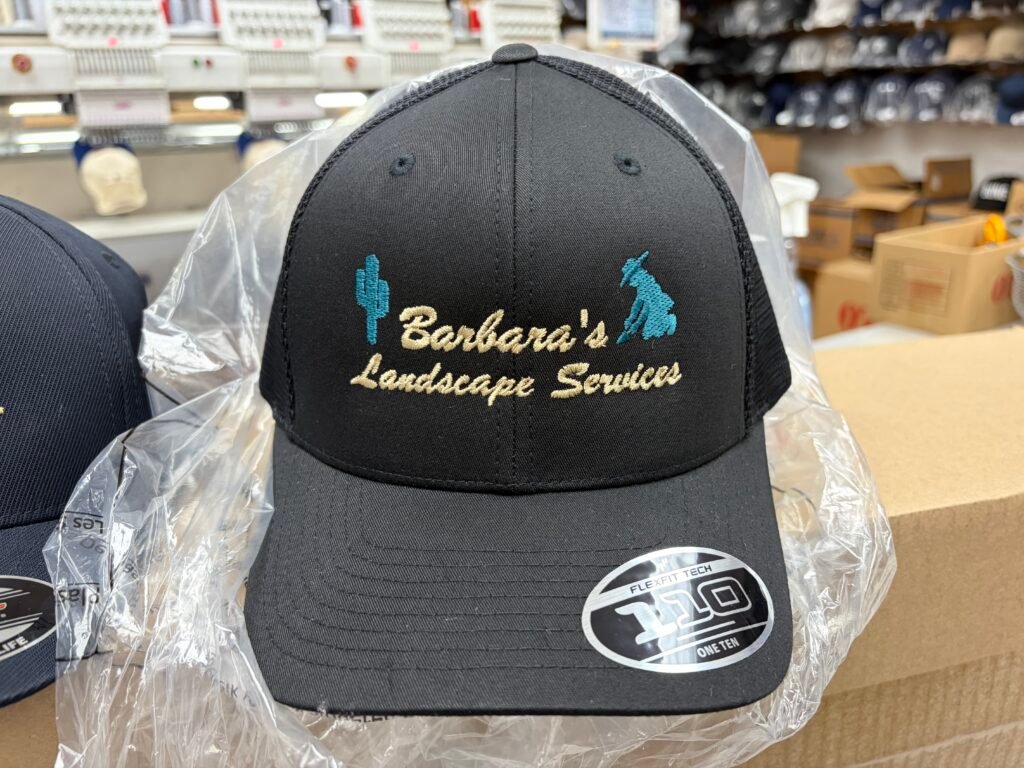
You could turn your team into walking advertisements through consistent, professional branded apparel.
Pros:
- One-time investment with long-term returns
- Works continuously without ongoing costs
- Builds familiarity through repeated exposure
- Increases professionalism and trust
- Every employee becomes a marketing asset
Cons:
- Requires upfront investment
- Needs maintenance and updates over time
- Only works if team actually wears it
- Takes time to build recognition
Best for: Small to medium businesses (5-100 employees) who want cost-effective, ongoing visibility without continuous ad spending.
Is Branded Apparel Right for Your Business?
Not every business needs the same approach. Let’s think through whether this makes sense for you.
Consider Your Customer Interaction Model
High visibility businesses (where customers see your team regularly):
- Construction and trades
- Landscaping and outdoor services
- Delivery and transportation
- Home services (plumbing, electrical, HVAC)
- Retail and hospitality
For these businesses, branded apparel has high impact because your team is constantly visible to potential customers.
Lower visibility businesses (where customers rarely see your team):
- Remote/online services
- Office-based professional services
- Manufacturing
For these businesses, branded apparel might still make sense for events, meetings, and building internal culture, but the ROI calculation is different.
Think About Your Growth Goals
If you’re trying to grow locally in San Diego County: Branded apparel creates consistent local visibility. Every time your team is out, you’re building recognition in your specific market.
If you’re trying to grow regionally or nationally: You might need a broader marketing mix. Branded apparel still helps, but it’s one piece of a larger strategy.
If you’re maintaining steady business: Branded apparel helps you look established and professional, which supports customer retention and referrals.
Evaluate Your Current Visibility
Ask yourself honestly:
- Do potential customers in your area know your business name?
- When your team is out in public, can people identify who they work for?
- Do you look as established as your competitors?
- Are you losing opportunities because people simply don’t know you exist?
If you answered “no” to most of these, you have a visibility problem that branded apparel can solve.
What Actually Works: A Practical Framework
If you’re considering branded apparel, here’s how to think about it strategically.
Start With Clear Objectives
What are you actually trying to achieve?
Brand awareness: You want more people to know your business exists Professional appearance: You want to look more established and trustworthy Team unity: You want employees to feel part of something bigger Marketing ROI: You want cost-effective advertising
Different objectives might lead to different apparel choices. Be clear about what matters most.
Match Apparel to Your Industry Context
What works for a landscaping company won’t work for a dental office. Think about:
Your work environment:
- Indoor vs. outdoor
- Physical labor vs. customer service
- Climate considerations (especially in San Diego’s microclimates)
Your professional standards:
- How formal does your industry need to be?
- What do successful competitors wear?
- What do customers expect to see?
Your practical needs:
- Durability requirements
- Cleaning and maintenance
- Safety considerations
- Comfort for all-day wear
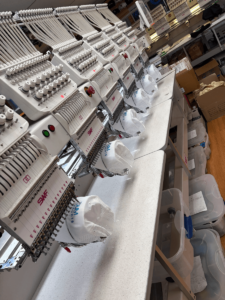
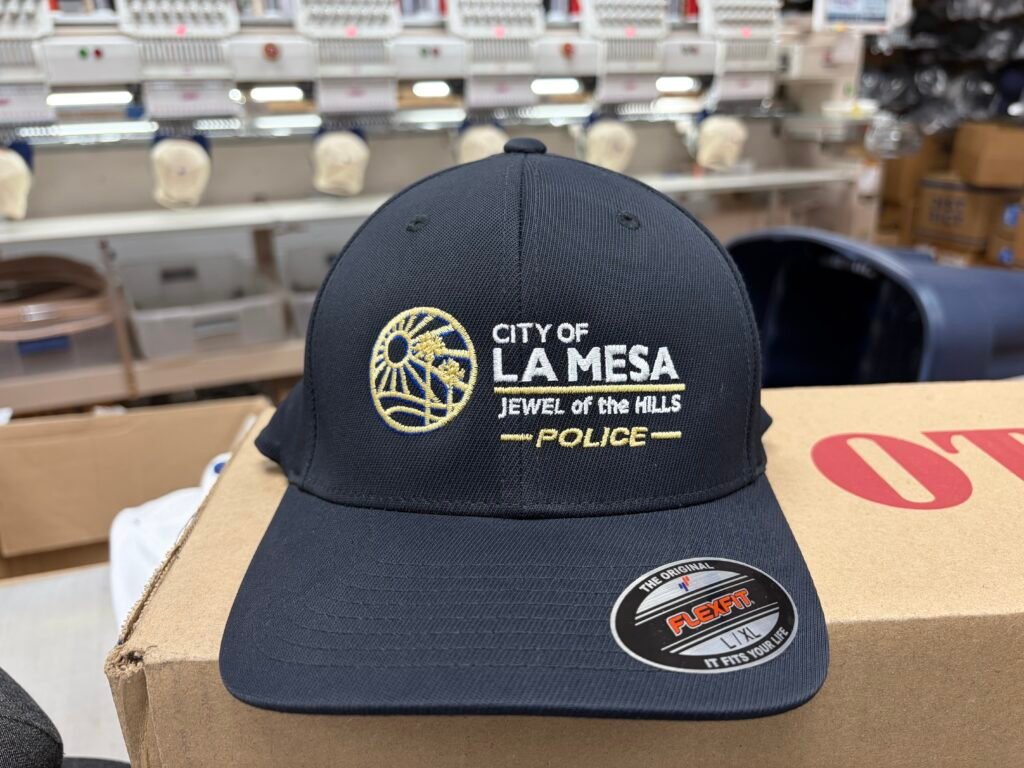
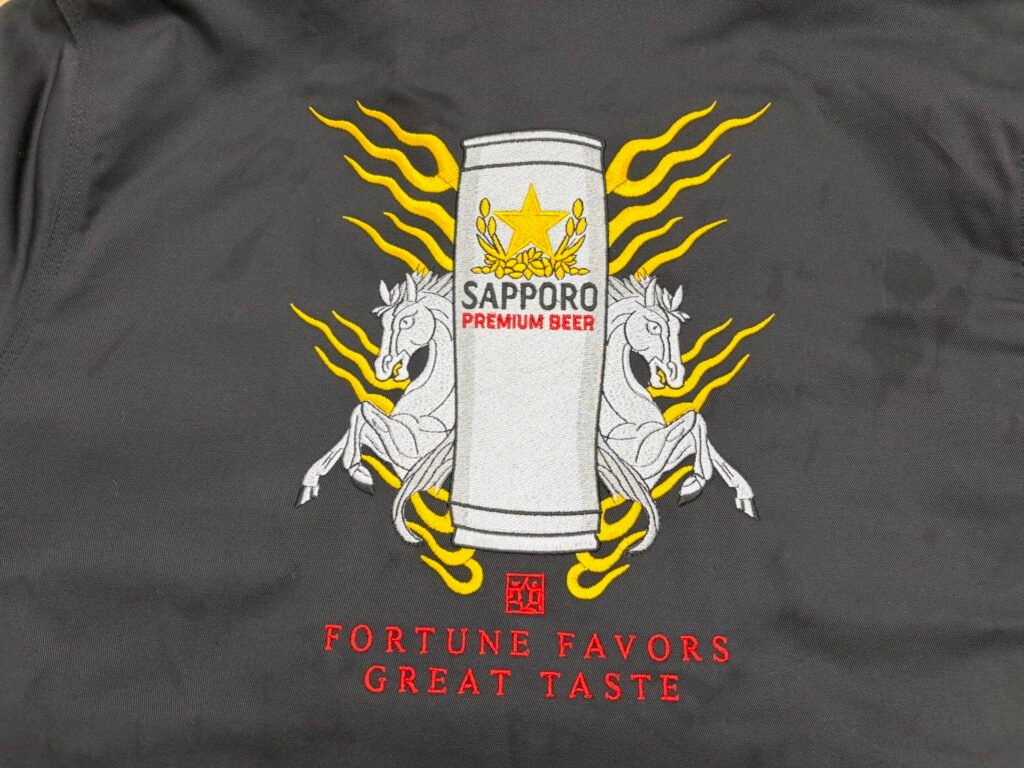
We create branded apparel – both silk screening and embroidery with computerized designs – for small to medium-sized businesses right here in San Diego. Since 1992, we’ve worked with over 14,000 clients across every industry you can imagine. The successful programs are the ones that match apparel choices to actual business needs, not just what looks good in a catalog.
Consider the Full Cost Picture
Let’s be realistic about investment. Quality branded apparel isn’t free, but let’s compare:
Initial investment for a 10-person team:
- Basic polos: $30-50 per person = $300-500
- Seasonal additions (jackets, etc.): $50-100 per person = $500-1,000
- Total first year: roughly $1,000-2,000
Ongoing costs:
- Replacements and new hires: $500-1,000 per year
- Updates and refreshes: as needed
Compare to traditional advertising:
- Radio campaign: $2,000-5,000 per month
- Billboard: $1,500-3,000 per month
- Online ads: $1,000+ per month ongoing
The math is pretty clear. Branded apparel is one of the most cost-effective marketing investments for small businesses.
But here’s the key: it only works if your team actually wears it. Which brings us to…
The Critical Success Factors
If you decide branded apparel makes sense, these factors determine whether it actually works.
Comfort Is Non-Negotiable
Uncomfortable employees won’t wear uniforms consistently. Period.
This means:
- Choosing appropriate fabrics for your climate and work environment
- Offering seasonal options (we covered this in the seasonal blog)
- Getting proper sizing and fit
- Selecting styles that work for your team’s actual activities
Browse through merlinembroidery.com and you’ll see over 3,600 styles. That variety exists because different businesses need different solutions. A moisture-wicking polo for outdoor summer work is completely different from a professional fleece for winter customer meetings.
Quality Matters More Than You Think
Cheap uniforms that fade, shrink, or fall apart after a few washes actually hurt your brand. They make you look struggling or unprofessional.
Quality branded apparel:
- Maintains appearance through repeated washing
- Holds embroidery or screen printing clearly
- Fits consistently
- Lasts long enough to justify the investment
This doesn’t mean you need the most expensive options. It means choosing appropriate quality for your needs and budget.
Consistency Creates Recognition
Branded apparel only builds recognition if it’s consistent. This means:
Visual consistency:
- Same logo placement and size
- Consistent colors across your team
- Professional appearance standards
Usage consistency:
- Everyone wears it, not just some people
- Worn during all customer interactions
- Maintained in good condition
Timing consistency:
- Appropriate seasonal options so people wear it year-round
- Regular updates so it doesn’t look dated
Employee Buy-In Is Essential
The best uniform program in the world fails if employees resist wearing it.
Get buy-in by:
- Involving employees in selection (within your guidelines)
- Explaining the business reasons (not just mandating)
- Providing enough options for different preferences
- Making sure it’s actually comfortable and functional
- Showing appreciation for their role in representing the brand
Making the Decision: A Framework
Here’s a practical way to think through whether this makes sense for your business right now.
Step 1: Assess Your Current Situation
Answer these questions honestly:
- How visible is your business currently in your local market?
- Do you have a visibility problem or a different problem?
- Is your team customer-facing enough for this to matter?
- What’s your current marketing budget and ROI?
- How do you compare to competitors in professional appearance?
Step 2: Calculate Potential Impact
Think through:
Daily impressions: How many people does each employee encounter daily? Annual exposure: Multiply by employees × working days Conversion potential: What percentage might need your services eventually? Value per customer: What’s a new customer worth to you?
Even if branded apparel only converts a tiny fraction of those impressions, the ROI can be significant.
Step 3: Consider Your Resources
Be realistic about:
Budget: Can you invest $1,000-2,000 initially for a small team? Time: Can you manage uniform distribution and standards? Commitment: Will you maintain this consistently, not just for a few months?
If the answer to any of these is “no,” maybe it’s not the right time. That’s okay. Better to wait and do it right than to do it halfway.
Step 4: Start Small If Uncertain
You don’t have to outfit everyone immediately. Consider:
Pilot program: Start with your most visible team members Test and learn: See what works before full rollout Gather feedback: Learn from your team’s experience Expand gradually: Add more people and options as you see results
This reduces risk and lets you refine your approach.
What Success Actually Looks Like
Let me share some real examples from San Diego businesses, so you can see what realistic outcomes look like.
The Gradual Build: Local HVAC Company
A small HVAC company started with just embroidered polos for their three technicians. Nothing fancy, just professional and consistent.
Over six months, they noticed customers mentioning seeing their trucks and employees around town. Call volume increased about 20%. Not dramatic, but steady and consistent.
They added seasonal jackets the next year. Then hats. Each addition reinforced the brand. Three years later, they’re the go-to HVAC company in their area, not because they changed their service, but because they became the familiar name.
That’s realistic growth from visibility.
The Professional Upgrade: Property Management Firm
A property management company had employees wearing whatever they wanted. They looked disorganized, even though they were actually very professional.
They invested in matching polos and quarter-zips. The change wasn’t dramatic – same people, same service. But property owners started commenting on how “put together” they looked.
They landed two major contracts that year. Both clients specifically mentioned professional appearance as a factor. The ROI was immediate and measurable.
The Team Culture Shift: Restaurant Group
A restaurant group with three locations wanted better team unity and local visibility.
They created branded hoodies and t-shirts that employees actually wanted to wear outside of work. Comfortable, stylish, not just “work clothes.”
Staff started wearing them to the beach, around town, at events. Brand visibility increased significantly. But the unexpected benefit was improved team culture – employees felt proud to represent the brand.
Turnover decreased 25%. That alone justified the investment.
Common Concerns and Honest Answers
Let me address the questions I hear most often.
“Will my team actually wear it?”
Honest answer: It depends on what you choose and how you implement it.
If you pick uncomfortable, ugly options and just mandate them without explanation, probably not consistently.
If you involve your team, choose quality comfortable options, explain the reasoning, and provide seasonal variety, most employees are actually proud to wear branded apparel.
“How do I know it’s working?”
Track:
- Customer comments about seeing your brand around
- Where new customers heard about you
- Call volume trends over time
- Employee feedback and compliance
It’s not always immediately measurable like a Google ad, but the cumulative effect builds over time.
“What if employees leave and take the uniforms?”
This happens. Factor it into your planning. Some businesses:
- Require return of certain items
- Consider it a cost of doing business
- Use it as an opportunity to update anyway
Former employees wearing your logo around town isn’t necessarily bad – they’re still creating visibility.
“How often do I need to replace uniforms?”
Depends on:
- Quality of items chosen
- How hard employees are on clothing
- How well they’re maintained
- How important fresh appearance is in your industry
Generally, plan for:
- Annual additions for new hires and seasonal needs
- Replacement every 1-2 years for heavily used items
- Updates every 2-3 years to keep things current
“Can I start small and expand?”
Absolutely. In fact, I’d recommend it if you’re uncertain. Start with your most visible team members, test what works, then expand.
Better to start small and succeed than to invest heavily in something that doesn’t fit your business.
The Alternatives Worth Considering
To be completely fair, branded apparel isn’t the only solution to visibility problems. Let’s look at alternatives.
Digital Marketing
Might be better if:
- Your customers primarily find you online
- You have budget for ongoing campaigns
- You can track and optimize digital performance
- Your service area is very broad
Branded apparel might be better if:
- Your customers are local
- You want one-time investment vs. ongoing costs
- Your team is highly visible in the community
- You want to build long-term brand recognition
Vehicle Wraps and Signage
Might be better if:
- Your vehicles are your primary visibility
- You have company vehicles (not personal)
- You work in high-traffic areas
- Your logo and message are simple
Branded apparel might be better if:
- Employees use personal vehicles
- Your team works in various locations
- You want visibility beyond just driving time
- You want to build personal connections
Networking and Referrals
Might be better if:
- You’re in a relationship-based industry
- You have time for consistent networking
- Your ideal customers are in specific groups
- You’re comfortable with active selling
Branded apparel might be better if:
- You want passive, ongoing visibility
- Your team is your best marketing asset
- You want to support (not replace) referrals
- You prefer systematic approaches
The truth? Most successful businesses use a combination. Branded apparel isn’t instead of other marketing – it’s a foundation that makes everything else work better.
Making Your Decision
Here’s my honest recommendation for thinking through this:
Branded Apparel Probably Makes Sense If:
- You have 5+ employees who are visible in your community
- You’re trying to grow locally in San Diego County
- You want cost-effective, ongoing marketing
- Professional appearance matters in your industry
- You can commit to doing it consistently
- You have $1,000-2,000 to invest initially
You Might Want to Wait If:
- You’re a solo operation with no plans to grow
- Your business is purely online/remote
- You can’t commit to maintaining standards
- You have more urgent business priorities
- Your budget is extremely tight right now
You Should Definitely Do It If:
- Competitors look more professional than you
- Customers don’t recognize your brand locally
- Your team wants to look more unified
- You’re losing opportunities due to visibility
- You’re ready to invest in long-term growth
There’s no universal right answer. It depends on your specific situation, goals, and resources.
If You Decide This Makes Sense
Here’s what I’d recommend as next steps:
1. Get Clear on Your Objectives
Write down specifically what you want to achieve:
- Increase brand awareness by X%
- Look as professional as competitors
- Build team unity and pride
- Generate X new customer inquiries
- Whatever matters to YOUR business
2. Involve Your Team
Talk to your employees about:
- What they’d actually wear
- Comfort and functionality needs
- Seasonal requirements
- Style preferences (within your brand guidelines)
Their input increases buy-in and helps you choose options that actually work.
3. Explore Your Options
Don’t just pick the first thing you see. Look at different:
- Styles and cuts
- Fabric options
- Price points
- Seasonal variations
Check out merlinembroidery.com where you’ve got over 3,600 styles to browse. See what’s available, what fits your budget, what matches your industry needs.
4. Start With a Solid Foundation
I’d recommend beginning with:
- Quality polos or work shirts (appropriate for your industry)
- One seasonal option (jacket or hoodie)
- Proper sizing for everyone
You can always add more later, but start with basics that work.
5. Plan for Consistency
Think through:
- When and how uniforms will be distributed
- What the standards and expectations are
- How you’ll handle new hires
- When you’ll refresh or update
Consistency is what makes this work long-term.
The Real Bottom Line
After 30+ years working with San Diego businesses, here’s what I know for sure:
Visibility matters. Not because it’s trendy or because everyone’s doing it. It matters because customers choose familiar brands over unknown ones, even when the unknown ones are better.
Branded apparel is one of the most cost-effective ways for small businesses to build that familiarity. It’s not magic, it’s not instant, but it works consistently over time.
But it only works if:
- It’s right for your specific business situation
- You choose appropriate, comfortable options
- You implement it consistently
- Your team actually wears it
If those conditions are met, branded apparel turns every employee into a marketing asset. Every coffee shop stop, every job site, every errand becomes an opportunity to build your brand.
Your competitors who are more visible? They’re not smarter than you. They just made a decision to be seen instead of invisible.
The question is: what decision makes sense for your business right now?
Ready to Explore Whether This Makes Sense for You?
Here’s what we do: We create branded apparel – both silk screening and embroidery with computerized designs – for small to medium-sized businesses right here in and around the San Diego region. Since 1992, we’ve helped over 14,000 clients just like you figure out what actually works for their specific situation.
Here’s how we help folks just like you: We don’t push you toward expensive solutions you don’t need. We listen to your business situation, your goals, your budget, and your team’s needs. Then we help you think through whether branded apparel makes sense, and if it does, what approach will actually work for your business. Whether you’re a 5-person operation or you’ve got 100 employees, we help you make informed decisions that fit your reality.
Here’s what I want you to do next: Think through the questions in this article. Get clear on whether you have a visibility problem and whether branded apparel is the right solution. Then get some inspiration – check out our online catalog at merlinembroidery.com where you’ve got over 3,600 styles to choose from. See what’s available, what fits your industry, what matches your budget.
Then reach out to me directly – Kevin McClellan at Merlin Embroidery. Call me at 619-884-9712 or email merlinemb@gmail.com . Let’s have an honest conversation about whether this makes sense for your business. No pressure, no hard sell – just straightforward advice to help you make the right decision for your situation.
Because at the end of the day, I’m here to help you succeed. And if branded apparel helps you get there, great. If you need something different, I’ll tell you that too. That’s what 30+ years of serving San Diego businesses has taught me – success comes from making the right decisions for your specific situation, not from following a one-size-fits-all approach.